

Give Back
Every donation matters.

Friday, May 1, 2026
4:00 – 6:00 pm
Kaplan Hall Room #348 (third floor)
In person
Advance Registration
Advance registration is required by Monday, April 27.
The Michael Henry Heim Memorial Lecture
This year’s talk is co-sponsored by the Department of Slavic, Eastern European and Eurasian Languages and Cultures, and the Department of Comparative Literature.
About the Talk
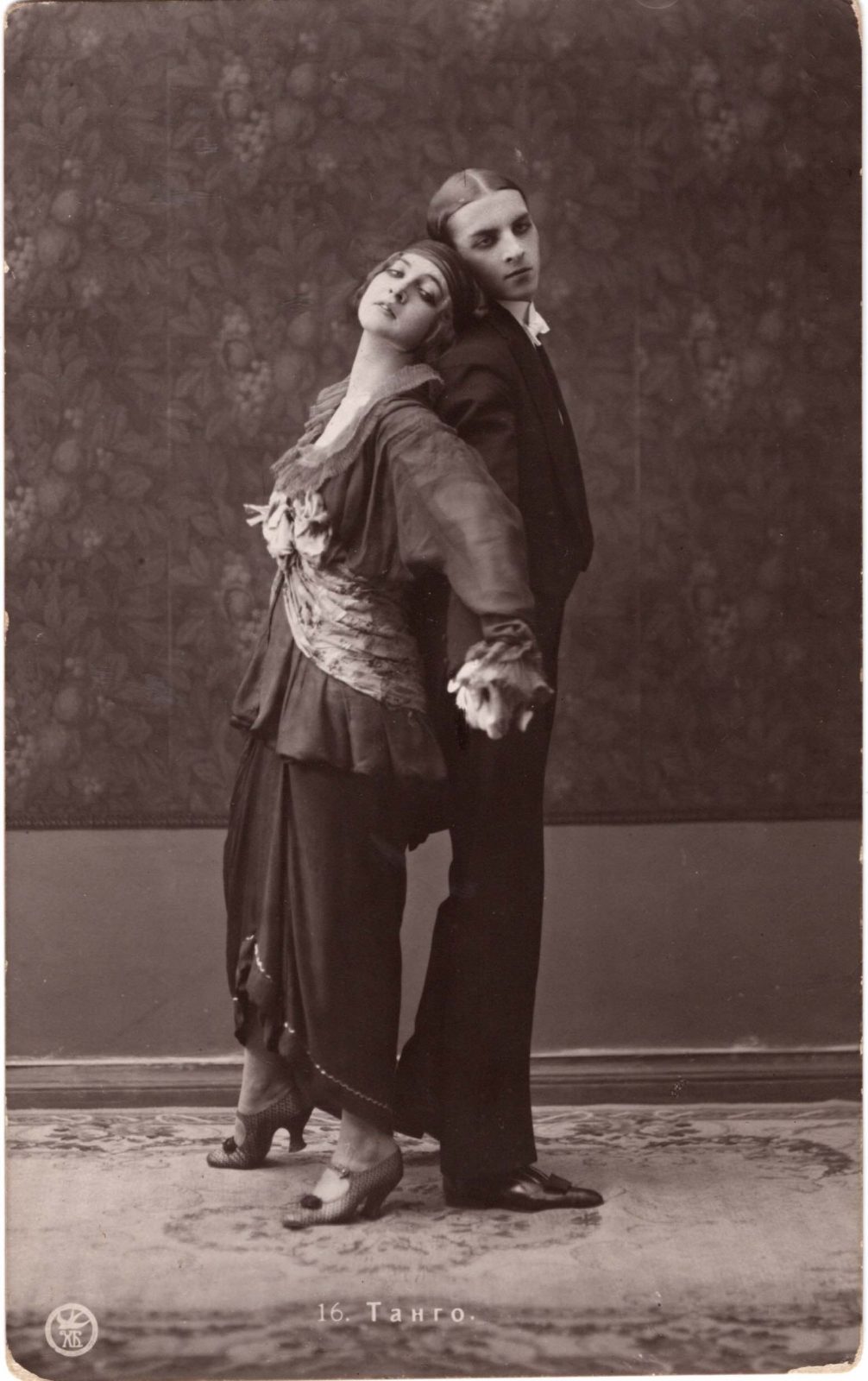
The years right before the outbreak of World War I were those of explosive cultural and technological change. Inventions such as the airplane, the automobile, the ocean liner, the telephone, wireless telegraphy, and the movies made visible the deep transformation of life in Europe and the Americas at the end of the Second Industrial Revolution. Artists and poets of the 1910s argued that classical Western mimetic arts could no longer convey the experience of modernity. Rather, new forms of life called for the emergence of new forms of art. The multinational Futurists of the Russian Empire began to paint their faces and bodies instead of canvas. The poet and professional aviator Vasily Kamensky published “simultaneous” poems whose reading order depended on the reader and which resembled Cubist paintings in words. Called Tango with Cows, Kamensky’s poetry collection reflected on the largest global pop-culture craze of 1913. The tango migrated from Argentina through Paris to become the quintessential dance of the modern metropolis: angular, sexual, strange, non-Western, and defiantly anti-traditional. Its conquest of social life from Los Angeles to Shanghai was accompanied by a revolution in consumerism and gender relations, signaled by tango-themed fashions and accessories. The Ukrainian “Querofuturist” Mykhail Semenko saw the tango as the right dance for a new Ukraine, while an amateur Armenian poet in the Caucasus complained that tango fashions destroyed family budgets and promoted divorce. But then World War I started and it turned out that a wholly different modernity was in the offing.
About the Speaker
 Eugene Ostashevsky is a poet and translator whose writing is described as “translingual” because of its focus on linguistic multiplicity and interference. His latest book of poetry, The Feeling Sonnets (NYRB Poets / Carcanet, 2022), examines the effects of speaking a non-native language on emotions, parenting, and identity. An earlier book, The Pirate Who Does Not Know the Value of Pi (NYRB Poets, 2017), discusses communication difficulties between pirates and parrots. He is the non-author of Alphabet Soup: The Translingual Sayings of Emma and Eva (Tamizdat / Rab-Rab Press, 2026), a forthcoming collection of verbal play by his daughters.
Parking for Campus Visitors
The closest parking structures to Kaplan Hall are Structure 2, Structure 3 North, Structure 4 and Structure 5. Parking rates vary by structure, so please refer to the rates here. Guest parking is available on a first come, first served basis. Please plan on arriving early to the event if you are not familiar with the campus or parkingstructures.
The UCLA Slavic department is not responsible for any tickets or citations received by event attendees. For further assistance, please contact the UCLA Transportation department directly.
VISITOR PARKING AREAS:
♦ Structure 2: Structure 2 has pay stations for visitors on the first and second floors. These floors are the only floors with visitor parking; there are also signs indicating which parking stalls are for visitors. The Google Maps link for the visitor’s section (“Pay Station Parking”) is here.
♦ Structure 3 North: Parking Structure 3 North, Visitor’s Section is located at 215 Charles E Young Dr N, Los Angeles, CA 90024. The parking structure has visitor parking in levels 1, 2 and 3. The Google Maps link to the visitor’s section (“Pay Station Parking”) is here.
♦ Structure 4: Parking Structure 4, Visitor’s Section is located at 221 Westwood Plaza, Los Angeles, CA 90095. The parking structure has visitor parking in level 1, and the entrance will state “Visitor’s Section” that guests enter through. The Google Maps link to the visitor’s section is here .
♦ Structure 5: Parking Structure 5, Visitor’s Section is located at 405 Portola Plaza, Los Angeles, CA 90095. The parking structure has visitor parking in both levels 4 and 6, and the entrance will state “Visitor’s Section” that guests enter through. The link to the visitor’s section is here .
HOW TO PAY FOR PARKING:
Self-service pay stations are located in all visitor parking areas. Visitors must pay for parking BEFORE they leave their vehicles. Visitor parking permits are not valid in parking stalls outside of the visitor parking section of the structure and stalls posted for Blue and X permits or otherwise reserved.
1. All self-service pay stations use pay-by-plate technology.
2. Once parked, go to the nearest parkingpay station
3. Enter your license plate number. If you do not have a license plate number, please enter the last 6 (six) digits of your Vehicle ID Number (VIN). Your VIN can be found on the driver’s side door or the lower driver’s side of the windshield.
4. Choose the amount of time that you would like to spend on campus.
5. Pay using the exact cash amount or with a credit card. For those using their VIN, please place your receipt on your dashboard, otherwise nothing else is required. Pay stations do not provide change. There are no refunds for pay station purchases.
Additional visitor parking information can be found on the UCLA Transportation website.